Key takeaways
- A home insurance deductible is the amount subtracted from a covered claim before the insurer pays.
- Most policies have a flat dollar all-perils deductible, and many add a separate percentage deductible for wind, hail or hurricanes.
- Percentage deductibles are based on your dwelling limit, not the damage, so they can run into the tens of thousands.
- Choose the highest deductible you could pay from savings tomorrow, and weigh the premium savings against the added risk.
In this guide
- How a home insurance deductible works
- Types of home insurance deductibles
- Percentage deductibles for wind, hail and hurricanes
- How to choose the right deductible
- Deductibles and filing a claim
- Ways to prepare for a large deductible
- Comparing deductibles across quotes
- The bottom line
- Frequently asked questions
A home insurance deductible is the amount you pay toward a covered property claim before your insurer pays the rest. Most policies use a flat dollar deductible, such as $1,000 or $2,500, for most losses. In many storm-prone states, a separate percentage deductible, often 1% to 5% of your dwelling limit, applies to wind, hail or hurricane damage.
The deductible is one of the few levers that directly lowers your premium, but it also sets how much cash you need on hand after a loss. Understanding how the different types work, especially percentage deductibles, can save you from a painful surprise after a storm.
How a home insurance deductible works
When you file a claim, the insurer calculates the covered loss amount, then subtracts your deductible. You are responsible for the deductible portion, typically by paying the contractor directly or simply receiving a smaller check.
Unlike health insurance, the deductible usually applies to each separate claim rather than once per year. Two unrelated losses in the same year generally mean two deductibles. Many policies do state that a single occurrence involving several types of damage triggers only one deductible, typically the higher applicable one.
Types of home insurance deductibles
| Deductible type | How it is set | When it applies | Common range |
|---|---|---|---|
| All-perils (standard) | Flat dollar amount | Most covered losses, such as fire, theft and water | Often $1,000 to $2,500 |
| Wind or wind and hail | Flat dollar or percentage of dwelling limit | Any windstorm or hail damage | Often 1% to 5% where percentage-based |
| Hurricane or named storm | Percentage of dwelling limit | Damage from a hurricane or named storm, per policy definition | Often 1% to 5%, sometimes higher on the coast |
| Earthquake | Percentage of dwelling limit | On separate earthquake policies or endorsements | Frequently 10% or more |
Percentage deductibles for wind, hail and hurricanes
Percentage deductibles are where most homeowners get caught off guard. The percentage applies to your Coverage A dwelling limit, not to the damage. A higher-value home therefore carries a higher dollar deductible, even at the same percentage.
Hurricane and named-storm deductibles
Many states along the Atlantic and Gulf coasts allow or require hurricane deductibles. Each policy defines the trigger. Commonly, the hurricane deductible applies only when a storm has been named or declared a hurricane by a national weather authority, and only during a window around that storm. Some states regulate when insurers can apply it and whether it applies once per season or per storm, so check your state insurance department for the rules where you live.
Wind and hail deductibles
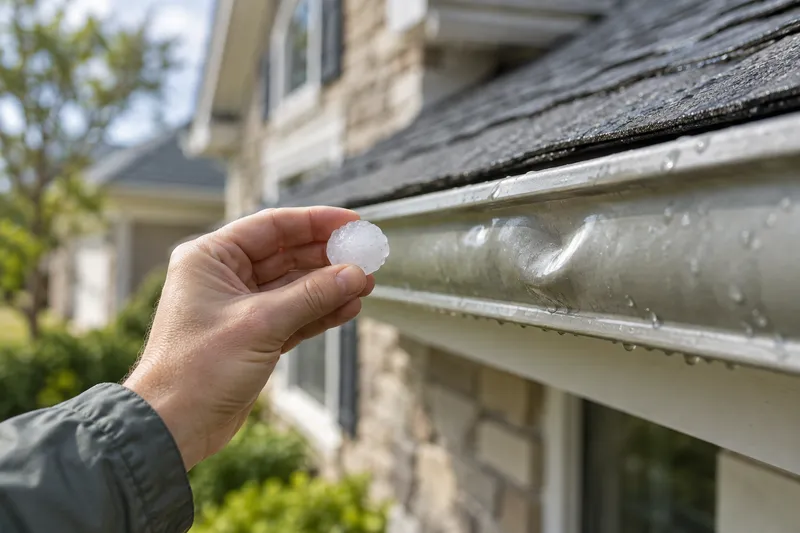
In the central and western plains and other hail-prone regions, insurers often apply a separate wind and hail deductible to any wind or hail event, named or not. Because hail claims are frequent and roof repairs are expensive, these deductibles have become more common and sometimes higher.
How to choose the right deductible
The right deductible balances the premium you save against the risk you take on. A practical approach:
- Know your cash buffer. Pick a deductible you could pay from savings immediately after a loss without borrowing.
- Get quotes at several levels. Ask for prices at, say, $1,000, $2,500 and $5,000, and for any percentage deductible at two or three percentages.
- Calculate the break-even. Divide the extra risk by the annual savings to see how many claim-free years it takes to come out ahead.
- Consider your claim habits. Many homeowners file only large claims anyway, since small claims can raise premiums. If so, a higher deductible may cost you little in practice.
A higher deductible is one of several ways to cut costs; our guide to lowering your home insurance covers the others, and how much homeowners insurance costs explains the other pricing factors.
Deductibles and filing a claim
Before you file, compare the estimated damage to your deductible. If the loss is only slightly above it, the payout may not be worth the potential premium increase and the claim on your record. For larger losses, file promptly and document everything. Our step-by-step guide to filing a home insurance claim explains what to do after damage occurs.
Mortgage lenders sometimes set a maximum deductible in the loan terms. If you plan to raise yours, check your mortgage documents or ask your servicer first.
Ways to prepare for a large deductible
If you live where a percentage deductible applies, a few habits can soften the blow when a storm hits:
- Set aside a dedicated fund. Keep the dollar value of your largest deductible in a high-yield savings account you do not touch for other goals.
- Strengthen the house. Impact-resistant roofing, storm shutters and reinforced garage doors can reduce damage, and some insurers or states offer premium credits for these features.
- Document the home now. Photos and video of the roof, siding and interior make it easier to prove storm damage and separate it from wear.
- Review before every renewal. Insurers sometimes raise the minimum percentage or change how the deductible is triggered, and the change may be easy to miss in renewal paperwork.
Taking these steps does not change the deductible itself, but it makes paying it far less disruptive.
Comparing deductibles across quotes
When you compare home insurance quotes, line up both the all-perils deductible and any special deductibles side by side. A quote that looks cheaper may simply carry a 5% hurricane deductible instead of 2%, shifting thousands of dollars of risk to you. Convert every percentage into a dollar figure so you are comparing real numbers.
The bottom line
Your home insurance deductible sets how much of each claim you absorb, and a percentage wind, hail or hurricane deductible can be many times larger than your standard one. Convert every percentage into dollars, choose a level you could pay from savings, and compare premium savings against the added risk before you decide.
Frequently asked questions
What is a typical home insurance deductible?
Flat all-perils deductibles of $1,000 to $2,500 are common, and many insurers now set $1,000 or more as a minimum. Wind, hail and hurricane deductibles, where they apply, are often 1% to 5% of the dwelling limit and can be higher in some coastal areas. Your options depend on your insurer, state and the risk profile of your home.
Do you pay a home insurance deductible if you are not at fault?
It depends. If another person or company caused the damage, such as a neighbor's tree or a contractor's error, your insurer may pay your claim minus the deductible and then try to recover costs from the responsible party. If that recovery succeeds, you may get some or all of your deductible back. The timing and outcome are not guaranteed.
How does a percentage deductible work?
A percentage deductible is calculated as a percentage of your dwelling coverage limit, not the size of the loss. With a 2% wind deductible and a $300,000 dwelling limit, you would pay the first $6,000 of a covered wind claim. If the damage is less than $6,000, the insurer pays nothing for that claim.
Is a hurricane deductible the same as a wind deductible?
Not exactly. A hurricane deductible usually applies only when damage is caused by a named or declared hurricane, often defined by a weather service announcement, and only for a set time window. A windstorm or wind and hail deductible applies to any wind or hail event. Your policy language defines the trigger, so read it closely.
Does the deductible apply to liability claims?
Generally no. The deductible applies to property claims under your dwelling, other structures and personal property coverages. Personal liability and medical payments to others coverage typically pay without a deductible, because the claim is being made against you by someone else rather than for damage to your own property.
Official Resources & Further Reading
Use these resources to check current guidance. Requirements and availability may vary by state and provider.
This guide is for general educational purposes and is not individualized financial, legal, tax or insurance advice. Product terms, rates and availability vary by provider and location. How we make money.