Key takeaways
- Usage-based insurance prices your policy using data on your actual driving, collected by an app, plug-in device, or connected car.
- Behavior-based programs track habits like braking and phone use; pay-per-mile programs charge mainly by distance.
- Low-mileage, daytime, smooth drivers tend to benefit most; some programs can raise rates for risky habits.
- Read the data and pricing terms before enrolling, including whether scores can increase your rate.
In this guide
- How does usage-based car insurance work?
- Types of usage-based insurance
- Who saves with telematics insurance?
- Pros and cons of usage-based car insurance
- How to get the most out of a telematics program
- Privacy and data: what to know
- Is usage-based insurance right for you?
- The bottom line
- Frequently asked questions
Usage-based car insurance prices your policy using data on how, when, and how much you drive, collected through a smartphone app, a plug-in device, or your car's built-in connectivity. Careful, low-mileage drivers can often save money, while drivers with risky habits or heavy mileage may see little benefit or even higher rates.
Traditional pricing relies on proxies such as age, location, and claims history. Usage-based insurance, often called telematics insurance, adds direct evidence of your driving. Whether that helps you depends on your habits and how comfortable you are sharing the data.
How does usage-based car insurance work?
When you enroll, the insurer collects driving data for a monitoring period or for the life of the policy. That data is turned into a score or a mileage count that feeds into your rate.
The data usually comes from one of three sources:
- Smartphone app: uses your phone's sensors and GPS. Most common today and easy to set up.
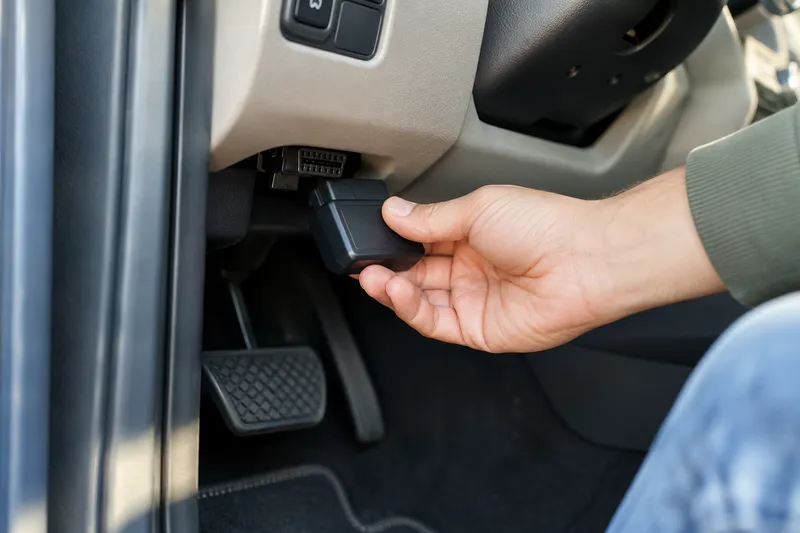
- Plug-in device: a small unit connected to the car's diagnostic port.
- Connected car: data shared directly from the vehicle's built-in telematics, with your consent.
Depending on the program, you may get an upfront discount just for enrolling, an adjustment after a monitoring period, or pricing that changes continuously.
Types of usage-based insurance
| Type | How it prices you | Best for | Watch out for |
|---|---|---|---|
| Behavior-based (pay-how-you-drive) | Driving habits such as braking, speed, time of day, and phone use | Smooth drivers who avoid late-night trips and phone use | Some programs can raise rates for risky scores |
| Pay-per-mile | A monthly base rate plus a per-mile charge | Drivers who log well below average mileage | Costs rise quickly with long commutes or road trips |
| Hybrid | Mileage plus some behavior factors | Low-mileage drivers who also drive carefully | More data collected; terms can be complex |
What behavior-based programs usually track
- Hard braking and rapid acceleration
- Speed, sometimes relative to posted limits
- Time of day, with late-night driving often weighted as higher risk
- Phone handling while the car is moving
- Miles driven
- Sometimes cornering and location
Who saves with telematics insurance?
Usage-based programs tend to favor drivers who:
- Drive fewer miles, such as remote workers, retirees, or city dwellers
- Mostly drive in daytime and avoid late-night trips
- Brake and accelerate smoothly
- Keep their phone out of their hands while driving
They tend to be a poor fit for people who:
- Commute long distances or drive for a living
- Regularly drive late at night because of work shifts
- Drive in heavy stop-and-go traffic that leads to frequent hard braking
- Share a car with a less careful driver whose trips may be scored as theirs
Pros and cons of usage-based car insurance
Potential benefits
- Rates tied to your own driving rather than only to group averages
- Enrollment and safe-driving discounts
- Feedback that can help build safer habits, especially for new drivers
- Can offset pricing disadvantages for young or new drivers with good habits
Potential drawbacks
- Some programs can increase your rate for risky driving
- Phone-based tracking may misread trips, for example when you are a passenger, though many apps let you flag those
- Ongoing location and behavior data collection raises privacy questions
- Savings may be modest if your habits are average
How to get the most out of a telematics program
If you enroll, a few habits can protect your score and your discount:
- Keep the app running and permissions on. Missing trips or disabled location access can delay or reduce a discount.
- Flag trips where you were a passenger, or in a taxi or rideshare, if the app allows it, so they are not scored as your driving.
- Put your phone out of reach or use a do-not-disturb driving mode. Phone handling is one of the most heavily weighted behaviors in many programs.
- Leave more following distance. It reduces hard braking events, which count against you.
- Plan errands for daytime where you can, since late-night trips are often scored as riskier.
- Check your trip feedback weekly so you can spot patterns before they affect your rate.
Privacy and data: what to know
Telematics programs collect detailed information, and policies differ. Review the program's privacy notice for what is collected, whether location is recorded, how long data is retained, and whether it may be shared with third parties or used in claims. State privacy laws vary, and some states limit how insurers can use this data.
Also be aware that some carmakers have shared connected-car driving data with third parties, and that data could reach insurers. Check your vehicle's connected services settings and privacy choices, and opt out of data sharing you did not intend.
Is usage-based insurance right for you?
A simple way to decide:
- Estimate your annual mileage. If it is well below average, pay-per-mile is worth quoting.
- Be honest about your habits. If you often drive late at night, brake hard in traffic, or handle your phone, a behavior-based program may not help.
- Compare real quotes. Get a standard quote and a usage-based quote from the same insurer, plus quotes from others.
- Check the rules. Know whether the program can raise rates and how easy it is to leave.
Usage-based programs are one of several ways to cut costs. Our guide to how to lower car insurance covers others, and our list of car insurance discounts shows what you might combine with telematics. Families with teens should also read car insurance for new drivers, and retirees driving less may find useful context in car insurance for seniors.
The bottom line
Usage-based car insurance can reward careful, low-mileage drivers with lower rates, but it is not automatically cheaper. Choose pay-per-mile if you drive little, a behavior-based program if your habits are smooth, and skip both if you drive a lot or at night. Always read the pricing and privacy terms before you enroll.
Frequently asked questions
Can usage-based insurance raise my rates?
Some programs only offer discounts, while others can raise your premium if the data shows risky driving, such as frequent hard braking, speeding, or late-night trips. Rules vary by insurer and state. Before enrolling, ask directly whether the program can increase your rate and how long your driving data affects pricing.
What does a telematics program track?
Common data points include miles driven, time of day, speed, hard braking, rapid acceleration, cornering, and phone handling while the car is moving. Some programs also record location. Exactly what is collected, how long it is kept, and whether it is shared varies by program, so review the privacy terms.
Is pay-per-mile insurance cheaper?
It can be for people who drive well below average, such as remote workers, retirees, or city residents who rarely drive. You pay a base rate plus a per-mile charge, so costs rise as mileage increases. Drivers with long commutes or frequent road trips often pay more than they would with a standard policy.
Can I quit a usage-based insurance program?
Usually, yes, though terms vary. Some insurers let you opt out at any time and remove the discount at renewal. Others treat the program as the policy itself, as with most pay-per-mile plans, so leaving means switching to a standard policy. Ask what happens to your rate if you leave.
Does usage-based insurance work for teen drivers?
Many families use telematics programs for teen drivers because the feedback on speed, braking, and phone use can encourage safer habits, and good scores may earn discounts. Keep in mind that risky driving could reduce or eliminate discounts, and in some programs raise rates, which affects the whole household policy.
Official Resources & Further Reading
Use these resources to check current guidance. Requirements and availability may vary by state and provider.
This guide is for general educational purposes and is not individualized financial, legal, tax or insurance advice. Product terms, rates and availability vary by provider and location. How we make money.