Key takeaways
- Repair usually makes sense for localized damage on a roof with plenty of life left; replacement for widespread wear or an aging roof.
- If repair costs approach a large share of replacement cost on an older roof, replacement often wins.
- Storm damage may be covered by homeowners insurance, minus your deductible; normal wear and tear is not.
- Be wary of contractors who knock after storms, ask you to sign on the spot or offer to cover your deductible.
In this guide
In the roof repair vs replacement decision, repair usually makes sense for localized damage on a roof with years of life left. Replacement usually makes sense when damage is widespread, the roof is near the end of its expected life, leaks keep coming back or the decking underneath is soft. Storm damage may be partly covered by insurance.
The right answer saves money either way. Repairing a failing roof can mean paying twice, while replacing a roof that only needed a fix wastes thousands. Below is a practical framework, plus what to know if a storm caused the damage.
How to decide between roof repair and replacement
Weigh four things: the roof's age, how widespread the damage is, the cost of each option and what is happening under the shingles.
| Situation | Usually repair | Usually replace |
|---|---|---|
| Roof age | Well within expected life | Near or past expected life |
| Damage extent | One area, a few shingles, one flashing leak | Damage across multiple roof planes |
| Leak history | First leak, clear source | Repeated leaks in different spots |
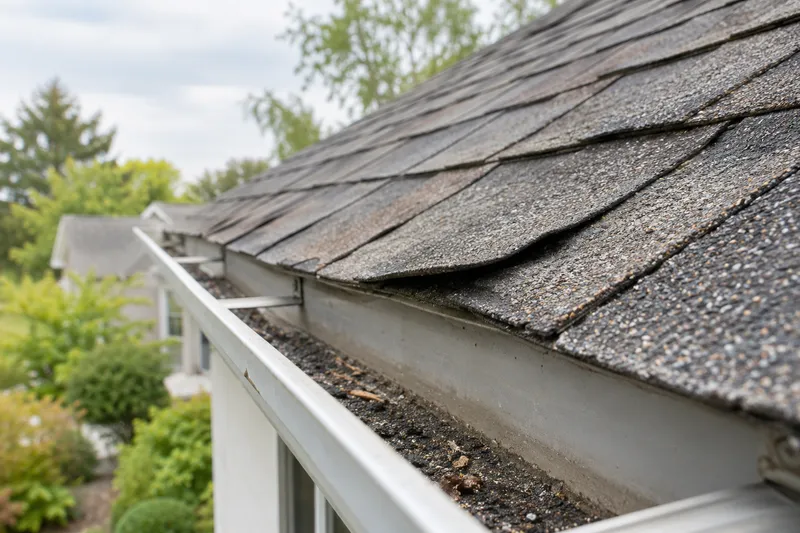
| Shingle condition | Mostly flat, granules intact | Widespread curling, cracking, bald spots |
| Decking | Solid | Soft, sagging or rotted areas |
| Cost comparison | Repair is a small fraction of replacement | Repair costs approach a large share of replacement |
Use a cost-versus-life test
A simple way to frame it is to compare what a repair costs with how much useful life the roof has left.
A younger roof changes the math. The same $2,500 repair on a 7-year-old roof protects many more years of life and is usually the smart move. Our guide to signs you need a new roof can help you judge remaining life.
When a roof repair makes sense
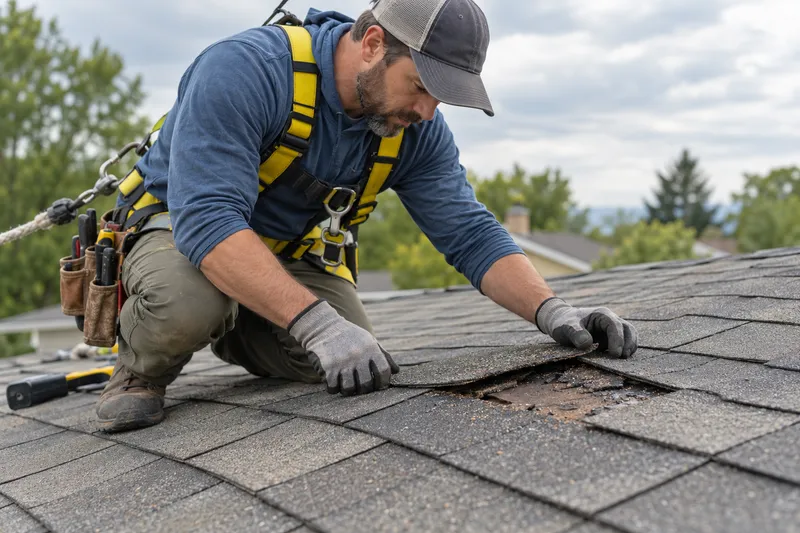
- Wind lifted or tore off a handful of shingles.
- Flashing around a chimney, vent or skylight has failed.
- A small leak has a clear, single source.
- The roof is relatively young and otherwise in good condition.
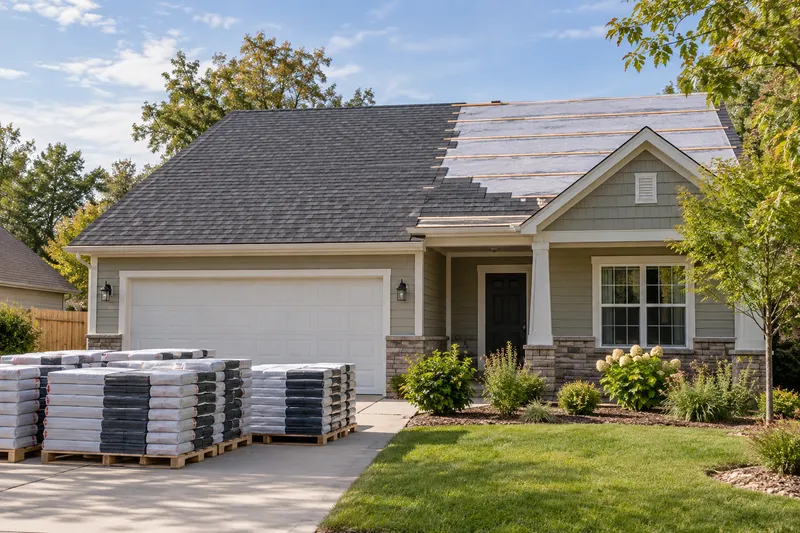
Partial reroofing, replacing one side or section, is an option when damage is limited to one plane. Be aware that new shingles may not match weathered ones, and the rest of the roof will still age on its original timeline.
When replacement is the smarter move
- The roof is near or past its expected lifespan.
- Shingles are curling, cracking or losing granules across the whole roof.
- You have had multiple leaks in different places.
- The decking is soft or sagging.
- Your insurer is raising premiums or limiting coverage because of roof age.
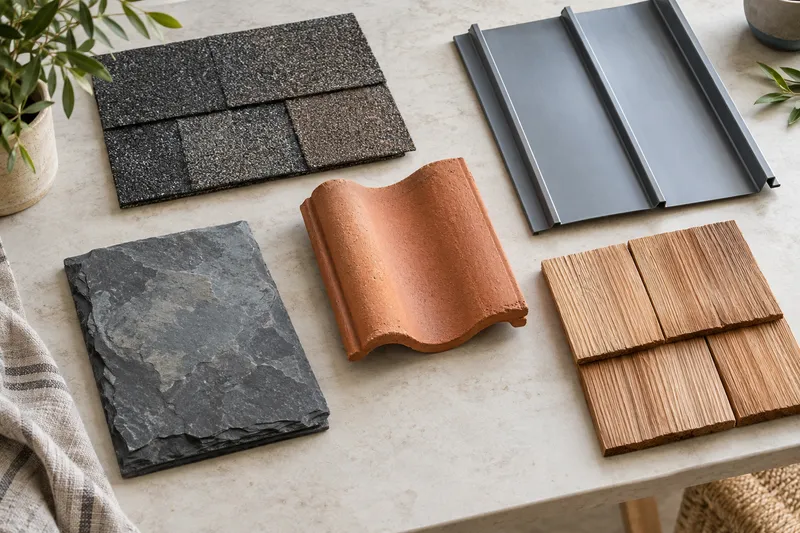
Our guide to roof replacement cost explains per-square pricing, and roofing materials compared can help you choose what goes on next.
Questions to ask your roofer
A good contractor will explain the reasoning behind a recommendation. Ask:
- Is the damage limited to one area, or are you seeing problems across the roof?
- What condition is the decking in, and how do you know?
- How many more years do you expect the roof to last if I repair it?
- Will a repair affect any existing manufacturer or workmanship warranty?
- Can you show me photos of the damaged areas?
If one roofer recommends replacement and another says a repair will do, a third independent opinion can be worth the time, especially for a large job.
Storm damage and insurance
If wind, hail, a fallen tree or another sudden event damaged your roof, your homeowners policy may help pay for repairs or replacement, minus your deductible. Policies generally do not pay for age, neglect or gradual wear. Some policies pay only actual cash value for older roofs, which subtracts depreciation, and some carry separate wind or hail deductibles expressed as a percentage of your dwelling coverage.
Whether the insurer approves a repair or a full replacement depends on the adjuster's assessment of damage, your policy's terms and sometimes local code or matching rules. Our step-by-step guide on how to file a home insurance claim covers documenting damage and working with the adjuster, and roof age and home insurance explains how older roofs are treated.
Storm-chaser red flags
After major storms, contractors often go door to door. Some are legitimate, but storm chasers can leave homeowners with poor work, unfinished jobs or insurance trouble. Watch for:
- Unsolicited visits right after a storm with claims of damage you cannot see.
- Pressure to sign a contract or authorization on the spot.
- Requests for a large cash deposit before work starts.
- Offers to waive, cover or rebate your insurance deductible.
- No local address, license or proof of insurance.
- Contracts that assign your insurance benefits to the contractor without clear explanation.
The bottom line
Repair localized damage on a roof with plenty of life left, and replace a roof that is old, widely worn or repeatedly leaking. Compare repair cost with remaining roof life, not just the invoice. If a storm caused the damage, document it, call your insurer and choose a licensed local contractor rather than whoever knocks first.
Frequently asked questions
Is it better to repair or replace a roof?
Repair is usually better when damage is limited to one area and the roof is well within its expected life. Replacement is usually better when damage is widespread, the roof is near the end of its life, leaks keep recurring or the decking is compromised. Get a written assessment from a licensed roofer showing whether the problem is local or roof-wide.
Will insurance pay to replace my roof after a storm?
If a covered peril such as wind or hail damaged your roof, your homeowners policy may pay for repairs or replacement, minus your deductible. Whether you get a full replacement depends on the extent of damage, your policy's roof terms and whether it pays replacement cost or actual cash value. Insurance generally does not pay for old age or wear.
Can I replace just part of my roof?
Sometimes. A section replacement can work when damage is confined to one plane of the roof. The drawbacks are that new shingles may not match weathered ones, and the older sections will still fail on their original schedule. If the rest of the roof is near the end of its life, a full replacement is often more cost-effective.
What is a storm chaser roofer?
A storm chaser is a contractor, often from out of town, who follows severe weather and solicits homeowners door to door. Some do legitimate work, but many use high-pressure tactics, do poor work or disappear before warranty issues arise. Warning signs include demands to sign immediately, large upfront deposits and offers to waive or cover your deductible.
How much does a roof repair cost?
Minor repairs, such as replacing a few shingles or resealing flashing, are often a few hundred dollars, while larger repairs involving decking or leaks can reach into the low thousands. Prices vary by region, roof pitch, material and how easy the damage is to reach. Get a written quote and compare it to the cost and remaining life of the roof.
Official Resources & Further Reading
Use these resources to check current guidance. Requirements and availability may vary by state and provider.
This guide is for general educational purposes and is not individualized financial, legal, tax or insurance advice. Product terms, rates and availability vary by provider and location. How we make money.