Key takeaways
- Asphalt shingles are the most common and least expensive choice, with a shorter lifespan than premium materials.
- Metal, tile and slate cost more up front but can last decades longer, lowering cost per year of life.
- Tile and slate are heavy and may need structural reinforcement; check before you choose.
- Climate, fire and hail risk, local codes and HOA rules can narrow your options before price does.
In this guide
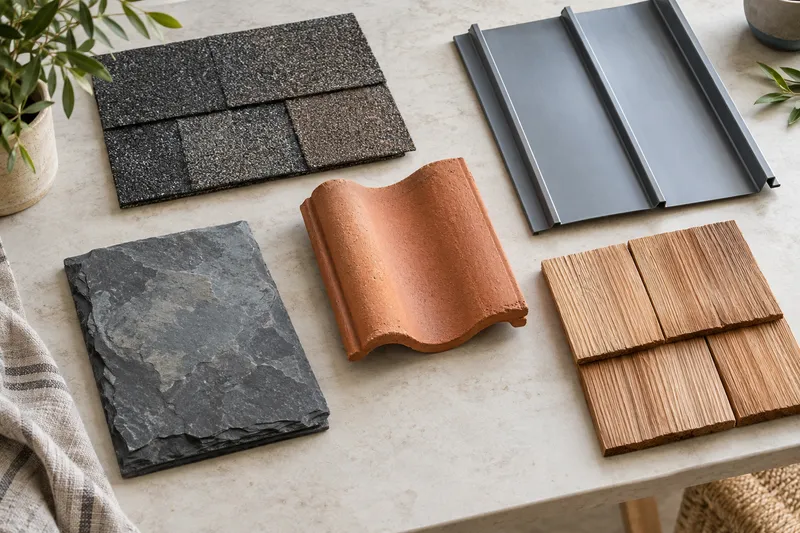
In a roofing materials comparison, asphalt shingles cost the least and last roughly 15 to 30 years, metal lasts about 40 to 70 years at a moderate premium, tile and slate last longest but cost and weigh the most, wood offers natural looks with more upkeep, and synthetic products imitate slate or shake at lower weight.
Choosing a roof is a long-term decision that affects your budget, your home's curb appeal and even your insurance premium. Below we compare the six most common residential materials side by side, then look at how climate, weight and cost per year of life should shape your choice.
Roofing materials compared at a glance
Costs are rough installed ballparks per square (100 square feet of roof) and vary widely by region, product and contractor.
| Material | Rough installed cost per square | Rough lifespan | Weight | Key strengths | Key drawbacks |
|---|---|---|---|---|---|
| Asphalt shingles | About $350 to $600 | 15 to 30 years | Light | Affordable, widely available, easy to repair | Shorter life, vulnerable to wind and hail |
| Metal | About $600 to $1,600+ | 40 to 70 years | Light | Long life, fire and wind resistant, reflects heat | Higher cost, can dent, noise without proper underlayment |
| Wood shakes or shingles | About $600 to $1,000 | 20 to 40 years | Moderate | Natural look, good insulation | Fire risk, rot, higher maintenance, insurance limits |
| Clay or concrete tile | About $650 to $1,300+ | 50+ years | Heavy | Durable, fire resistant, suits hot climates | Heavy, brittle under foot traffic, costly |
| Slate | About $1,500 to $3,000+ | 75+ years | Very heavy | Longest life, fire resistant, premium look | Highest cost, needs specialist installers, heavy |
| Synthetic (composite) | About $700 to $1,300 | 30 to 50 years | Light to moderate | Mimics slate or shake, lighter, impact resistant | Newer products, performance varies by brand |
Pros and cons of each roofing material
Each material has a distinct balance of cost, weight, durability and maintenance. Here is what to expect from each.
Asphalt shingles
Asphalt is the most common roofing material in the U.S. because it is affordable and familiar to nearly every roofer. Three-tab shingles are the budget option, while architectural (dimensional) shingles are thicker, look more textured and generally last longer and handle wind better. Impact-resistant versions are available for hail-prone areas and may earn insurance discounts with some carriers. Asphalt is also the easiest material to patch, since replacement shingles are widely stocked, which keeps small repairs affordable. The trade-off is lifespan: in very hot climates or on poorly ventilated attics, shingles can age faster than the rated life on the package.
Metal roofing
Metal roofs come as standing seam panels, exposed-fastener panels or stamped shingles that mimic other materials. They shed snow well, resist fire and reflect sunlight, which can reduce cooling costs. Standing seam systems cost more but have concealed fasteners that reduce leak points. Metal can dent in severe hail, depending on gauge and profile. Rain noise is a common worry, but with solid decking and proper underlayment most metal roofs are not noticeably louder than shingles. Metal also pairs well with solar, since some standing seam systems allow panels to clamp to the seams without drilling through the roof.
Wood shakes and shingles
Cedar and other wood roofs offer a classic look. They require more maintenance, can rot or grow moss in damp climates and pose fire risk unless treated. Some jurisdictions restrict wood roofs in wildfire areas, and some insurers limit coverage or charge more for them.
Clay and concrete tile
Tile is popular in hot, sunny regions and on Spanish, Mediterranean and Southwestern style homes. It is very durable and fire resistant, but individual tiles can crack if walked on. Concrete tile usually costs less than clay but is heavier. The tiles themselves often outlast the underlayment beneath them, so a tile roof may need the underlayment replaced during its life even when the tiles can be reused.
Slate
Natural slate can outlast the house around it. It is fireproof and elegant but is the most expensive option and requires experienced installers. Repairs require matching stone and specialized skills.
Synthetic roofing
Synthetic slate and shake products are made from recycled plastics, rubber or composite materials. They offer the look of premium materials with less weight and often good impact and fire ratings. Because the category is younger, compare manufacturer warranties and ratings carefully.
Which roofing material is best for your climate?
Weather is often the deciding factor. As a general guide:
- Hail-prone areas: Impact-resistant asphalt shingles, heavier-gauge metal and some synthetic products hold up better than standard shingles.
- High-wind and coastal areas: Metal and properly fastened, wind-rated shingles or tile tend to perform well; local codes may set minimum wind ratings.
- Wildfire zones: Class A fire-rated materials such as metal, tile, slate and many asphalt and synthetic products are commonly preferred, and untreated wood may be restricted.
- Heavy snow: Metal sheds snow easily; any roof in cold climates benefits from ice barrier underlayment and good attic ventilation.
- Hot, sunny climates: Tile, light-colored metal and reflective cool-roof shingles can reduce heat gain.
How to choose the right roofing material
Upfront cost is only one piece. Consider cost per year of expected life:
Other factors that should shape your choice:
- Climate: Hail, high wind, heavy snow, wildfire risk and intense sun each favor different materials.
- Structure: Heavy materials may need reinforcement.
- Home style and HOA rules: Some neighborhoods restrict materials or colors.
- Local codes: Fire ratings and wind ratings may be required in some areas.
- Insurance: Material and age affect premiums and eligibility. See roof age and home insurance.
- Time in home: If you may sell within a few years, premium materials may not pay back.
For a full cost breakdown, including tear-off and decking, see roof replacement cost. Not sure you need a new roof yet? Start with signs you need a new roof. If your current roof has isolated damage, roof repair vs. replacement explains when a fix is enough.
The bottom line
Asphalt shingles win on upfront cost, while metal, tile and slate win on longevity, and synthetic products fill the gap in between. Compare materials by cost per year of life, your climate, your roof's structure and your insurer's rules, not sticker price alone. Get quotes on two or three materials to see the real difference for your home.
Frequently asked questions
What is the best roofing material?
There is no single best material. Asphalt shingles offer the lowest upfront cost, metal balances long life with moderate weight, tile suits hot climates and certain architectural styles, and slate offers the longest life at the highest price. The best choice depends on your budget, climate, roof structure, local codes and how long you plan to own the home.
What roofing material lasts the longest?
Natural slate typically lasts the longest, often 75 years or more when properly installed and maintained. Clay tile and some metal roofs can also last many decades. Longevity depends heavily on installation quality, flashing and underlayment, which may need attention before the roofing material itself wears out.
Is a metal roof worth the extra cost?
It can be if you plan to stay in your home for many years. Metal roofs usually cost more than asphalt up front but can last two to three times as long, resist wind and fire well and reflect heat. If you may move within a few years, you might not recoup the extra cost, though it can be a selling point.
Are synthetic roofing materials any good?
Synthetic slate and shake products, made from polymers or composite materials, can mimic natural materials at lower weight and often lower cost. Many carry long warranties and good impact ratings. Because they are newer, long-term real-world performance varies by product, so review the manufacturer's warranty, fire and impact ratings and your installer's experience.
Does roofing material affect home insurance?
Yes. Insurers consider roof material along with age when pricing coverage. Impact-resistant shingles or metal may earn discounts in some hail-prone areas, and fire-resistant materials matter in wildfire zones. Some insurers restrict coverage for wood shake roofs. Ask your insurer how a material choice would affect your premium before you buy.
Official Resources & Further Reading
Use these resources to check current guidance. Requirements and availability may vary by state and provider.
This guide is for general educational purposes and is not individualized financial, legal, tax or insurance advice. Product terms, rates and availability vary by provider and location. How we make money.