Key takeaways
- Lower U-factor means less heat escapes; SHGC controls how much solar heat comes in, and the right SHGC depends on your climate.
- ENERGY STAR sets different U-factor and SHGC limits for four U.S. climate zones, so a certified window for Texas may not qualify in Minnesota.
- Low-E coatings and gas fills often deliver much of the gain; triple pane mainly pays off in cold northern climates.
- The federal 25C window tax credit ended for property placed in service after Dec. 31, 2025.
In this guide
Energy efficient windows reduce heat loss in winter and unwanted heat gain in summer through insulated glass, low-E coatings, gas fills, better spacers and tight-sealing frames. To compare them, read the NFRC label for U-factor, solar heat gain coefficient (SHGC), visible transmittance and air leakage, then match those numbers to your ENERGY STAR climate zone.
The phrase "energy efficient" on its own tells you very little. Two windows marketed the same way can perform very differently, and the best choice for a home in Phoenix is not the best choice for one in Duluth. This guide explains the ratings, what the glass features actually do, and how to decide what is worth paying for.
How to read the NFRC window label
Most windows sold in the U.S. carry a label from the National Fenestration Rating Council (NFRC), an independent rating program. The label reports whole-window performance, meaning it accounts for the frame and spacer as well as the glass. That makes it far more useful than a glass-only figure.
| Rating | What it measures | Typical scale | Which direction is better |
|---|---|---|---|
| U-factor | How easily heat passes through the window | Roughly 0.15 to 1.20 for residential windows | Lower keeps heat in (or out) better |
| Solar heat gain coefficient (SHGC) | Share of the sun's heat that gets through | 0 to 1 | Lower in hot climates; higher can help in cold climates |
| Visible transmittance (VT) | How much daylight passes through | 0 to 1 | Higher means brighter rooms |
| Air leakage (AL) | Air passing through joints in the window | Cubic feet per minute per square foot; 0.3 or less is a common benchmark | Lower means fewer drafts |
| Condensation resistance (optional) | Resistance to interior condensation | 1 to 100 | Higher is better |
U-factor
U-factor is the headline efficiency number. It measures the rate of heat transfer, so a window rated 0.22 lets through noticeably less heat than one rated 0.30. It matters in every climate, but most in places with long heating seasons.
SHGC
SHGC is the number people most often get wrong. In hot, sunny regions, you want a low SHGC to keep cooling bills down. In cold regions, a moderate SHGC can let in useful winter sun, especially on south-facing glass. Some homeowners even choose different glass for different sides of the house.
Visible transmittance and air leakage
Coatings that block heat can also dim the view slightly, so check VT if natural light is important to you. Air leakage reflects how well the sash seals when closed. A great U-factor won't help much if the window leaks air, which is also why installation quality matters.
ENERGY STAR climate zones for windows
ENERGY STAR divides the country into four window climate zones: Northern, North-Central, South-Central and Southern. Under ENERGY STAR Version 7.0, which took effect in late 2023, the core requirements are:
| ENERGY STAR zone | Maximum U-factor | SHGC requirement |
|---|---|---|
| Northern | 0.22 | At least 0.17 (with an alternate equivalent-performance path) |
| North-Central | 0.25 | No separate SHGC limit listed for most products |
| South-Central | 0.28 | 0.23 or lower |
| Southern | 0.32 | 0.23 or lower |
Certified windows often list which zones they qualify for. Criteria are revised periodically, so confirm the current version with the manufacturer or on the ENERGY STAR site when you shop.
Double pane vs triple pane windows
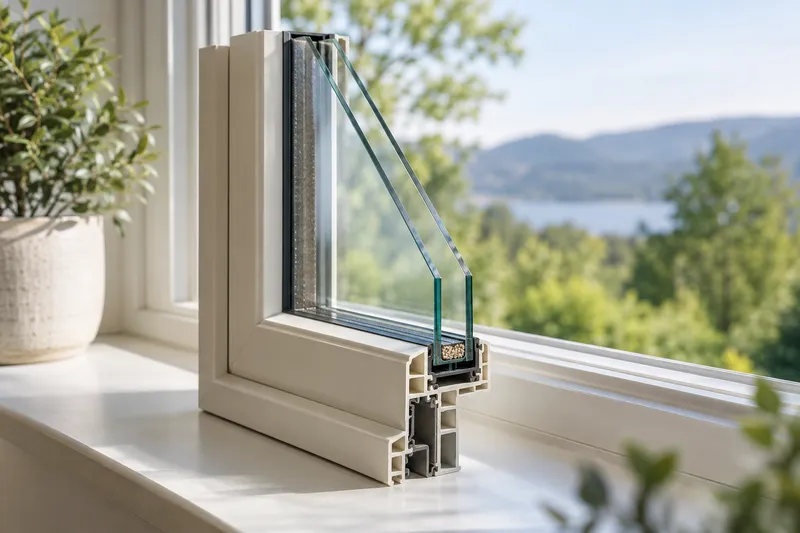
Double-pane (two layers of glass) is the standard for new replacement windows. Triple-pane adds a third layer and a second insulating gap.
- Double pane: lower cost and weight, widely available, and with low-E and argon it can meet ENERGY STAR in most zones.
- Triple pane: lower U-factors, warmer interior glass surfaces, less condensation risk and often better sound dampening. It is heavier and more expensive, and the added benefit shrinks in mild climates.
As ENERGY STAR tightened its Northern zone criteria, triple pane became a common way to qualify there, though some high-performance double-pane designs also meet it.
What low-E coatings, gas fills and spacers do
- Low-E coatings: microscopically thin metallic layers that reflect infrared heat. Different formulations are tuned for high or low solar gain, which is how manufacturers hit a specific SHGC.
- Gas fills: argon, or sometimes krypton in narrow gaps, insulates better than air. Some gas can slowly escape over many years.
- Warm-edge spacers: the strip separating panes can conduct heat; less-conductive spacers reduce cold edges and condensation at the glass perimeter.
- Frame material: vinyl, fiberglass and wood insulate better than standard aluminum. Our window replacement cost guide compares frame prices.
Are energy efficient windows worth the cost?
The answer depends on what you are replacing. Swapping single-pane or failing windows usually brings the biggest comfort and energy improvement. Replacing decent double-pane windows purely for energy savings is harder to justify on the numbers. If your current windows are structurally fine, weatherstripping, storm windows or fixing a single failed sealed unit may deliver better value; see window repair vs replacement.
If you are planning broader efficiency upgrades, windows are one piece of the picture alongside insulation, air sealing and heating equipment. Some homeowners also compare the payback of windows with other projects such as solar; our guide to whether solar is worth it covers that math. Impact-rated or laminated glass can sometimes affect home insurance in storm-prone areas, which is one of the ideas in our guide on how to lower home insurance.
The bottom line
The most useful tools for choosing energy efficient windows are the NFRC label and your ENERGY STAR climate zone. Focus on a low U-factor, pick an SHGC that suits your climate, and insist on quality installation. Triple pane mostly earns its keep in cold regions, and with the federal 25C credit gone for 2026 installs, check local rebates before you buy.
Frequently asked questions
What is a good U-factor for windows?
Lower is better, and what counts as good depends on climate. Under ENERGY STAR Version 7.0, windows must have a U-factor of 0.22 or lower in the Northern zone, 0.25 in North-Central, 0.28 in South-Central and 0.32 in the Southern zone. Many double-pane low-E windows land in the upper end of that span, while triple-pane units often reach the lowest values.
Are triple pane windows worth it?
Triple pane windows can be worth it in cold climates with long heating seasons, near busy roads where extra sound reduction helps, or in rooms with large glass areas. They cost more, weigh more and may need sturdier frames. In mild or hot climates, a well-specified double-pane low-E window often delivers most of the comfort benefit for less money.
Do energy efficient windows really save money?
They can lower heating and cooling costs and improve comfort, especially if you are replacing single-pane or badly leaking windows. However, savings depend on climate, energy prices, how bad the old windows were, and how well the new ones are installed. Energy savings alone rarely repay the full cost quickly, so most people also weigh comfort, condensation, noise and maintenance.
Can I still get a tax credit for energy efficient windows?
Not at the federal level for new installations. The Energy Efficient Home Improvement Credit under Section 25C was terminated for property placed in service after December 31, 2025. Some states, municipalities and utilities still offer rebates or financing for efficient windows or whole-home upgrades, so check local programs and ask a tax professional about your situation.
Official Resources & Further Reading
Use these resources to check current guidance. Requirements and availability may vary by state and provider.
This guide is for general educational purposes and is not individualized financial, legal, tax or insurance advice. Product terms, rates and availability vary by provider and location. How we make money.